

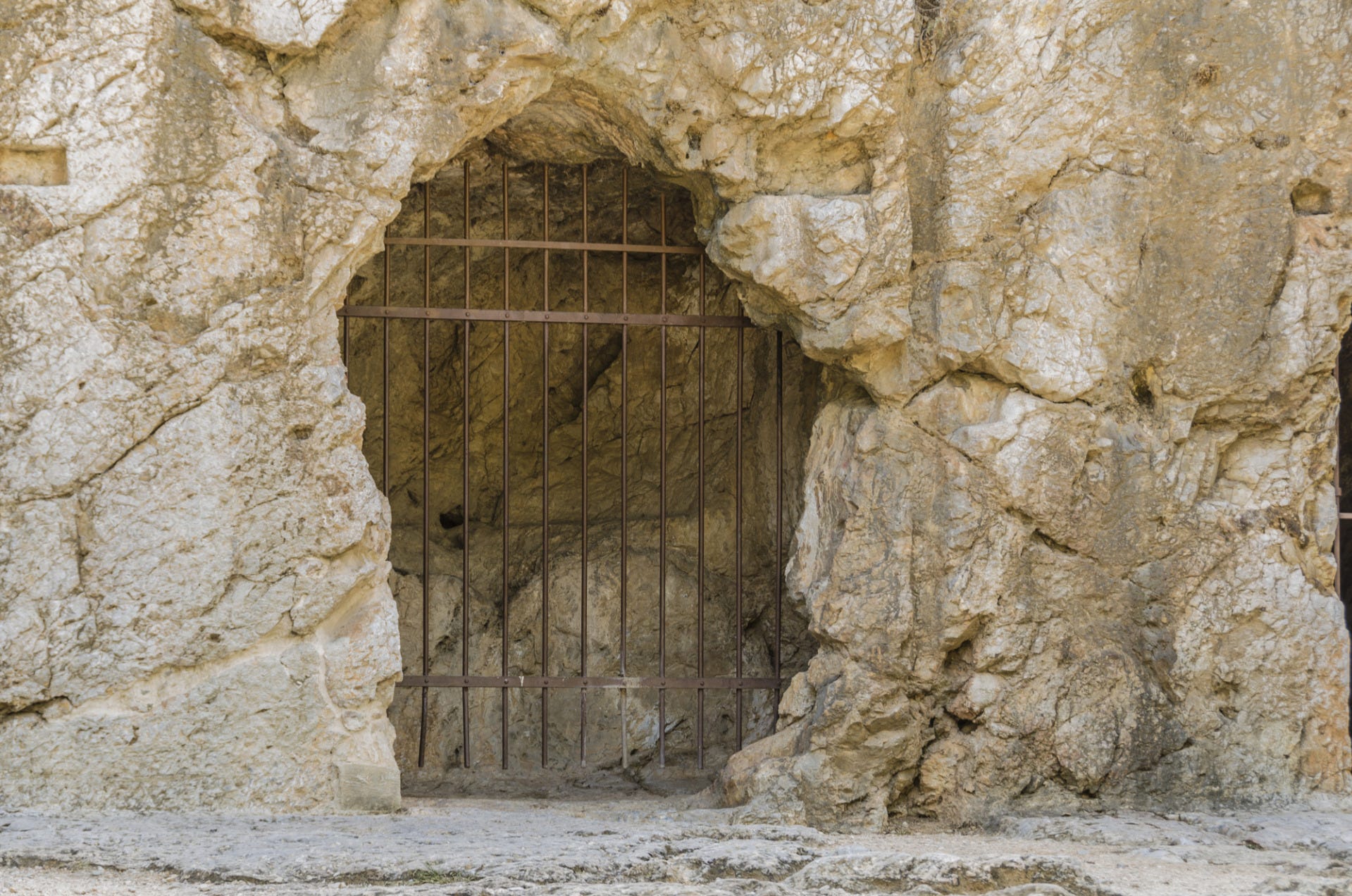
In Plato’s Socratic text, Crito, Socrates is talking to his friend, Crito, while awaiting his own execution. Crito offers to break Socrates out of prison, avoid his execution, and take him out of Athens to another city that would welcome him with open arms. He’s already got the hook-up with the guard, and the rest of his friends have a plan in place. All they need is Socrates to go!
But Socrates refuses.
And so Crito, hoping to change Socrates’ mind, starts providing arguments why he should agree to go. And the first one is an interesting one.
For his first argument, Crito says the following:
“Your death means a double calamity for me. I shall not only lose a friend whom I can never possibly replace, but besides a great many people who don’t know you and me very well will be sure to think that I let you down, because I could have saved you if I had been willing to spend the money. And what could be more contemptible than to get a name for thinking more of money than your friends? Most people will never believe that it was you who refused to leave this place although we tried our hardest to persuade you.” (43b-c)
Socrates’ response, as might be expected, is this:
“My dear Crito, why should we pay so much attention to what ‘most people’ think?” (43c)
“Got to be good looking ‘cause he’s so hard to see.” - The Beatles
When you create something, who is it for? What is the created thing’s purpose?
We are losing the breadth of answers to this question that we once had. The more we create things for online consumption, the more narrowly we view creative acts through that lens.
When you put together Reels, YouTube videos, or Substack articles, you may simply be sharing what you wanted to put together in the hopes that others will find it. But if you really want to find some sort of “success” on these platforms, you have to cater to THE ALGORITHM. As such, you may follow trends. You format things a certain way. You edit your videos to “maximize engagement.” You write your Substack articles to maximize “readability”, and include hooks and pitches and well-placed “subscribe” buttons. MAXIMIZE MAXIMIZE MAXIMIZE.
None of this is inherently wrong, but it does affect the creative act.
It is no longer “pure creativity,” but creativity towards some goal. And, again, while this too is not inherently wrong, the goal is often not one an artist would generally articulate without the pressures of social media: to “grow a following,” or something like that.
And I’ll say it again, there’s nothing inherently wrong with seeking to grow an online following. It can be a great way to get paid for your artistic efforts, or simply build an online community around something you are passionate about.
But it does have its negatives, and we should be aware of them. Namely, instead of doing “purely creative acts,” your time is spent doing creative acts with the algorithm in mind. Doing the creative acts that will garner the most engagement, the most likes, the most shares, and comments, and reactions.
With everyone learning the same dances, the same writing styles, the same editing styles, the same thumbnails, the same fast-paced speech, bright colors, and music, we are slowly eroding the very diversity that creativity—and humanity—used to thrive on.
This is what makes THE VOID different. THE VOID has no algorithm you need to please before people will see your work. Just a couple human editors and some very human subscribers and purchasers. You can create with nothing in mind but the pure creativity, the inspiration. Or you can create with THE VOID in mind. And you still have a goal, but it’s no longer a goal defined by some mysterious algorithm. It’s “is this a pure act of creativity?”
And it is our hope that this means THE VOID will publish things that would never get picked up by THE ALGORITHM, that thing that caters towards “the many”. Let us remember that THE ALGORITHM is interested not in elevating good art, but in making its corporation money.
THE VOID is interested only in elevating good art. Human art. And that’s what makes us different.
It didn't occured to me that THE VOID was named in such a way. I find it more meaningful now.
(But also I know you’re talking about your Void but I appreciated the wide breathe)